
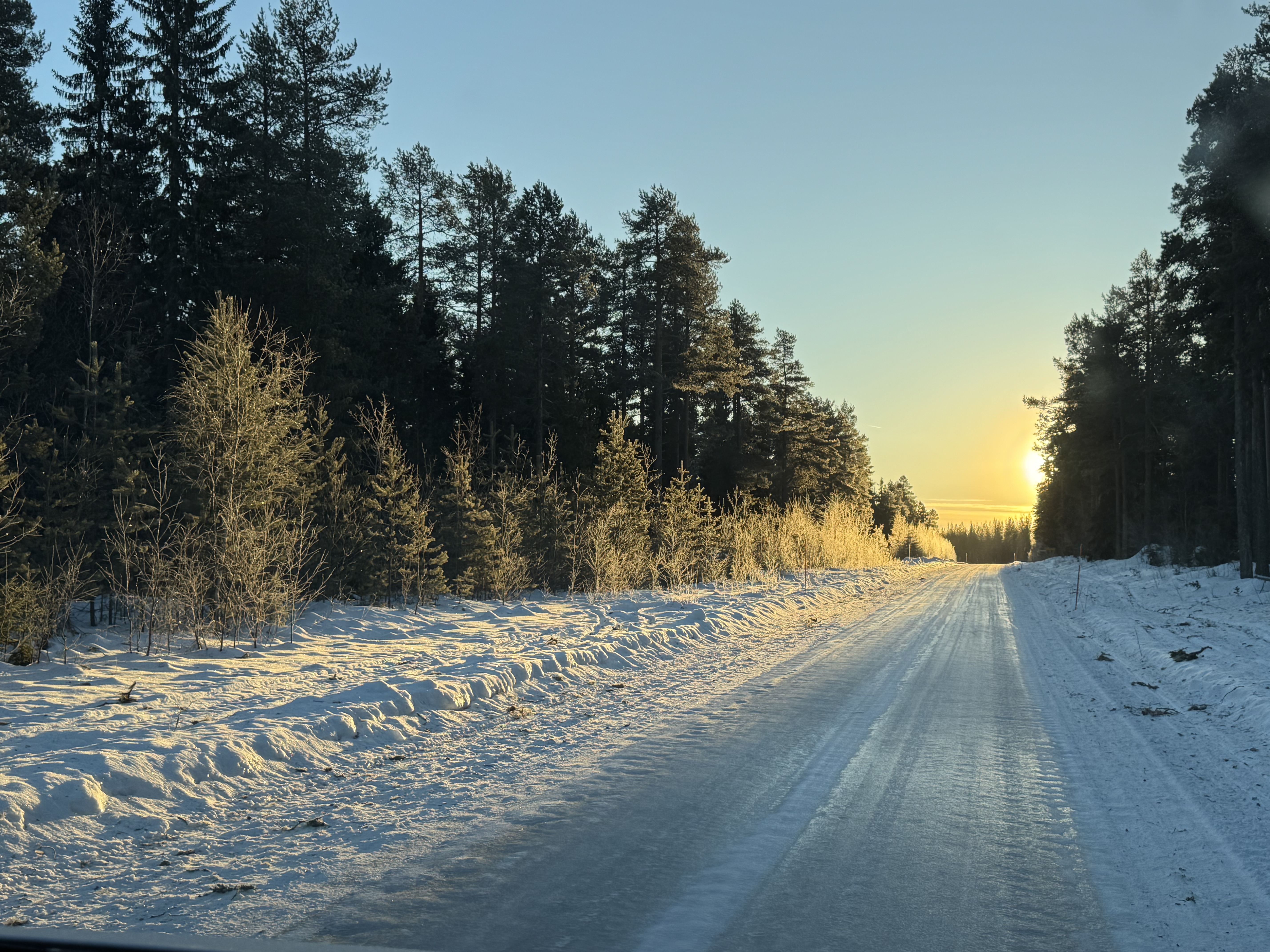
As the sun begins to show itself again up here in the cold north, we begin a new year and a new semester at universities. We would like to thank everyone for your impactful contributions to the projects we are co-creating across the world. We learned that almost 2,000 visitors from 76 different countries took part in our support platform during this third year of online activity. Thank you so much for showing interest, sharing your experiences, and getting involved in sustainability education in your local and global communities. Your shared narratives inspire and drive us to continue on this journey.
Last year, we had the great pleasure of gaining support from several networks and projects taking place on a local and international scale. I have had the opportunity to join lecturers at many universities internationally to create the Impact Network for Regenerative Futures (IN4RF), which inspires action with students and communities to initiate seed projects to transform learning experiences. We have been listening to narratives from many different cultures and providing opportunities to connect through online events and physical events at events organized around the world.
Coming up in February, we will be holding an online event where students can meet and share their narratives about their seed projects that are springing into action across university towns. In May (1st-3rd), we also plan to hold a hackathon event at Acadia University in Wolfville, Nova Scotia, Canada. Dr. Kent Williams at Acadia University hosts the event and has shared some information about the location:
This two-day event will be a vibrant space for dialogue and collaboration as we explore transformative and transdisciplinary pathways through our collected seeds and scenarios. Together, we’ll engage both IN4RF members and students in shaping innovative approaches to regenerative futures. Wolfville is located in Nova Scotia’s Annapolis Valley. It’s home to the province’s mildest climate, amazingly high tides, bountiful farms, and vibrant towns and villages. Our campus is located in the ancestral territory of the Mi’kmaq People, and history abounds throughout the Valley, from the National Historic Site in Grand-Pré to the early French and British colonial settlements in Annapolis Royal.

“The natural world is essential to life. Finite, delicate, and irreplaceable, it faces myriad challenges from civilization. Exemplifying what is at stake is the Acadian Forest Region, a wild, biodiverse, and breathtaking setting. Come learn firsthand about the environment, its challenges, and the solutions you might apply both here and in the wider world.” – K.C. Irving Environmental Science Centre Harriet Irving Botanical Gardens
We have also found support with the KlimatNätverk: Higher Education’s climate network, who work to create connections across universities in Sweden. At the workshop with lecturers across universities in Sweden we had an interesting dialogue about the different needs for lecturers who have different levels of experience. Providing support for all levels of activity may be complex but a fantastic opportunity for the community to assist each other no matter what stage we are at on our journey through the maze of sustainability education. Together we can share activities, resources, and learning experiences with teachers across all disciplines. We look forward to our collaboration with Cecilia Enberg, Linköping University, and Anne-Kathrin Peters (KTH) to sprout new avenues for creativity and inspiration this year.
This year, what can you do to get involved with your local community? How can you connect to different heart-holders for regenerative futures? Would you like to join our network of creative and inspiring individuals that love to collaborate, help support, and innovate?
Leave a Reply