Transformative Learning
Our primary goal is to foster a global community of practice for knowledge sharing on transformative learning for positive
societal impact.
Next Co-creation at Zuyd Univeristy of Applied Science

days
hours minutes seconds
until
Coming in 2027!
Purpose
The network is focused on fostering sustainable-as-flourishing futures (SAFF) through education. We support education’s transformative power in promoting human rights, sustainability, and a better future rooted in social justice and cultural diversity.
Goals
- Identifying transformational seeds for higher education learning
- Exploring and modelling seeds and scenarios for transformative learning
- Developing strategies for sustainable futures in education
- Facilitating knowledge sharing among global researchers, practitioners, and learners.
- Supporting emerging scholars in transdisciplinary research.
Vision
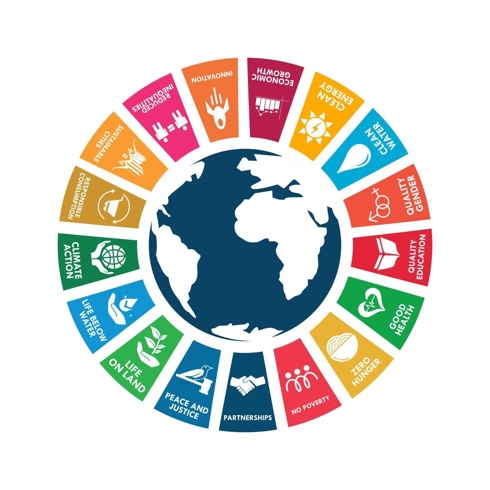
We build a formal network aligning with the UN’s 2030 Agenda and the Declaration of Rights for Indigenous Peoples, focusing on climate change, biodiversity loss, food security, social injustice, and inequality.

Seeds
What kind of education models and approaches could prepare learners to embrace the ongoing challenges in our planet and enable sustainable- as-flourishing futures?
Seeds focus on positive futures in exploring educational approaches that represent real-world agents of current social-ecological educational approaches that are transformational. The seeds can disrupt, grow, and transform current educational approaches.
Student Activities
Student scholars are invited to mentor and engage in the project to form a Transdisciplinary Student Network (TSN). Many opportunities, including Undergraduate, Master’s, and PhD Academies organized by scholars in the network and focusing on sustainable development. These academies seek to contribute to capacity building to address the complex challenges highlighted in this project.
Second, the students will be invited to participate and present in webinars specific to young scholars. The wenairs seek to contribute to the growth of students by developing their presentation skills and by inviting an expert to provide feedback on the work presented.
Third, TSN will also get involved with activites of the network team, including the Seeds-Scenario Development Workshop. By participating in this project, the students will gain valuable training and exposure to social-ecological systems research involving different skills and experiences such as collaboration and working in interdisciplinary and transdisciplinary teams, project management, scholarly exchanges, knowledge mobilization and dissemination as well as problem solving. The skills development and experiences would valuably contribute to their training and career.


Teacher Activities
We co-create a strategy and design that can enable maximum engagement combining in-person and virtual participants in our collective inquiry workshop. As part of the knowledge mobilization, we will share our insights with others on building an engaging hybrid meeting approach. A database of expereinces will be shared.
This project will offer valuable experiences to emerging scholars and highly qualified personnel as a compelling mechanism for building new knowledge. The project will house an international network that provides a pluralism of knowledge and experience. A transdisciplinary project will create the possibility to reflect upon emergent ideas.
Heart-Holders
This project will work closely with non-academic participants in private, public and community organisations. For example, we hope to work with Elder Albert Marshall and make a request to him using appropriate cultural protocols. Participants will be able to reflect on sustainability from a traditional ecological knowledge lens. The inclusion of perspectives from an Indigenous Elder will help to mobilize non-academic knowledge to identify relevant actors for cultural sharing.
Knowledge exchange will allow students and academics to develop inter-cultural skills and explore ideas of knowledge, what makes knowledge and who makes knowledge. Scenarios that explore how the world’s resources are utilized today, how resources should be utilized tomorrow and how this system can be transformed in the spaces available will provide practical examples of the Three-Horizons method. Emerging action and social-ecological research designs will work with communities in a symbiotic listening and learning environment to provide opportunities for dialogue and the realization of beneficial transdisciplinary impact research collaborations for all involved.