
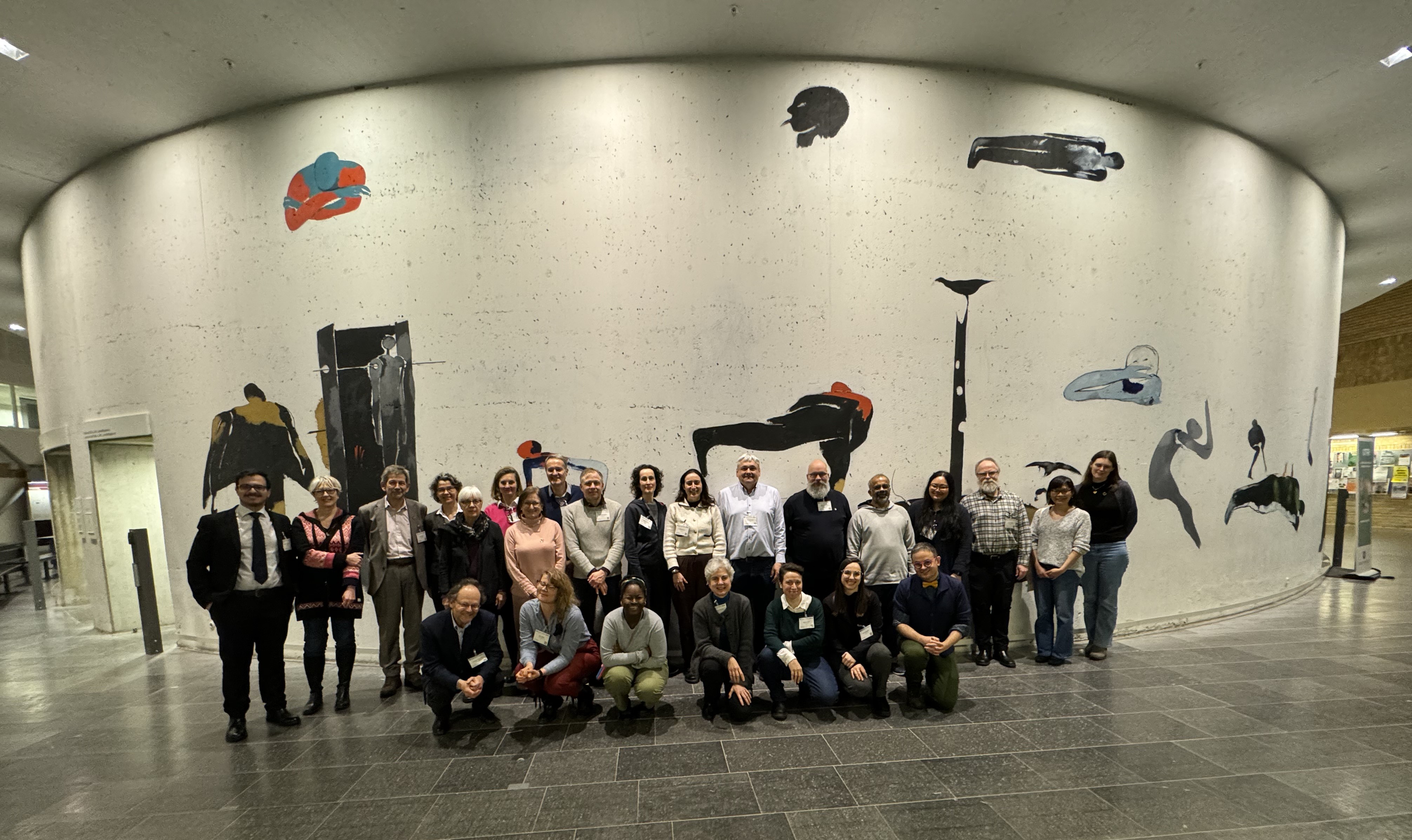
We had some very encouraging and ardent discussions at the symposium we held last week. Thank you to everyone who came to contribute to the work and provide insight into how sustainability education is experienced in so many different countries and cultures. We would like to thank Professor Walter Leal and Bianca Rebelatto for supporting the organisation of the event and for starting off the presentations with some interesting insight into sustainability competencies needed in different sectors. Also, Professor Dirk Franco at UHasselt University discussed how to integrate sustainability competencies into an education system with both top-down and bottom-up approaches. João H.P.P. Eustachio at HAW-Hamburg University of Applied Sciences in Germany presented his work on sustainaility competencies and leadership styles.
Thank you to professors Inga Schmidt-Ross and Susanne Hensel-Börner at HSBA Hamburg School of Business Administration in Germany, who provided insight into how experiential learning within organisations can help to develop intrapersonal competencies to a deep level. Thanks also to associate professor Tom Korsman at Umeå University in Sweden, who provided insight about sustainability education in environmental science programs. It was great to catch up with Marcus de Vries at Zuyd International Business School Maastricht in the Netherlands, who revealed the fantastic development of the work achieved to provide students with co-created learning experiences through sustainability competency capacity building. The Netherlands have support from the education policy system to create great opportunities for the students. Thank you to Carmelita Euline Ginting-Carlstrom at Aalto University School of Business in Finland, who presented her experiences as she finishes her PhD studies and investigates how to move forward with the big issues of growth vs degrowth and feminism in sustainability education.
We would also like to thank research fellow Liisi Pajula at the University of Tartu in Estonia, who contributed greatly to discussions of meaning, behaviour and gave insight about sustainability mindsets in teacher training. Head of the design school, Beatriz Amann at Istituto Europeo di Design Madrid in Spain inspired us by the experiences from sustainability competencies in a Spanish education system and Vasiliki Kioupi at University of Leeds in the UK, compared her expereinces in the British education system. Lars Samuelsson at Umeå University Sweden provided great discussions about ethics and etymology in sustainability education and further fantastic contributions from the humanities with a special guest Ann Knaepen a senior lecturer at Hogeschool UCLL in Belgium.
At the end of the first day, Professor Nick McGuigan and Thomas Kern at Monash University in Australia led a futuring workshop where we discussed frustrations and applied different activities to inspire creative thinking and imagine a future of higher education. It was great to have you all at the workshop where your contributions supported the work we produced together. The room was filled with passion, interdisciplinary discussion and solution thinking that together lead to some positive and fruitful activities. I am so grateful that you all provided the support for sustainability education and how we can share with others on the website advancingesd.com. We are looking forward to meeting you all again in the near future.
On the second day, Thomas Treacy lecturer at TU Dublin Ireland discussed the benefits of incorporating local organisations in the work with students to build sustainability competency capacities. One great example was discussed about the work the engineering students have been doing with The TU Dublin-Glanua Sustainability Challenge. Providing real-life sustainability challenges that students can work with to build competencies at the same time putting solutions into action. Also, coordinating professor Benedita Malheiro at ISEP, Polytechnic of Porto & INESC TEC in Portugal presented her work with the management and application of team building in an engineering student capstone project using multidisciplinary challenges to develop sustainability competencies.
Johan Boman at University of Gothenburg in Sweden shared his experiences working in the sustainability education unit that provides opportunities for lecturers to develop their sustainability education teaching. Several different projects, including mapping the education about sustainability across different programs at the university, developing sustainability competencies and thematic forum days that have been held since 2017. Also, Drama theatre specialist in pedagogics professor Eva Österlind at Stockholm university in Sweden presented her fantastically creative ideas behind including the arts in sustainability education across disciplines. We were lucky to experience the work of creative performance and how easily students can open up to new perspectives and new ideas when facing challenges with art. We look forward to seeing you at the AOMO later this year!
Ylva van Meeningen at Lund University in Sweden presented the work she has been applying with graduate students to incorporate sustainability in their PhD education. Lund University has made a large investment in their PhD education by striving to get students of various backgrounds and to offer the PhD students several courses with a sustainability focus. We also had some online presentations, firstly Daniela Savino at Università degli studi di Bari in Italy presented Skills Development for Sustainability in the VET Context: The Green Wave Project and its Innovative Pedagogical-didactic Mode. She elaborated how the SDGs can be organized for students by the heart – values, head – critical thinking, and hand – action model. Finally, Aaron Redman at Arizona State University in the US presented Measuring Competence Building in Climate Change Education. He presented a database that contains measures that can better understand impact of sustainability competence towards climate change.
Thank you all again, everyone. The reflection questions this week: What space can you provide to support each other in the work for sustainability education? How can we apply interdisciplinary knowledge to inspire action to tackle sustainability challenges? Why does intrapersonal thinking through the use of art in education across disciplines create positive fun engagement with students?
Leave a Reply